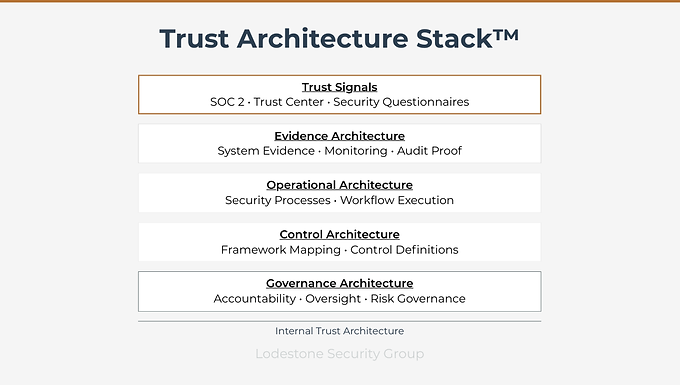
Trust Architecture Stack™
The Trust Architecture Stack™ illustrates the layered structure required for a security and compliance program to function reliably. Governance establishes accountability and oversight. Controls define expectations. Operational workflows execute those controls. Evidence architecture proves execution occurred. Trust signals—such as certifications, trust centers, and security responses—communicate that reliability externally. When these layers are misaligned, organizations produce compliance artifacts that lack operational support.
The Problem This Model Solves
Many organizations attempt to produce external trust signals before the underlying architecture exists. This creates programs that appear mature but lack operational stability. The model helps organizations understand which structural layer is missing or misaligned so trust signals reflect real operational capability rather than compliance theater.
When This Model Applies
Preparing for SOC 2 or other certifications
Experiencing friction in enterprise security reviews
Building or rebuilding a security and compliance program
Diagnosing why trust signals are not producing buyer confidence
What This Model Is Not
A compliance framework
A certification model
A control library
A replacement for SOC 2, ISO, or regulatory standards